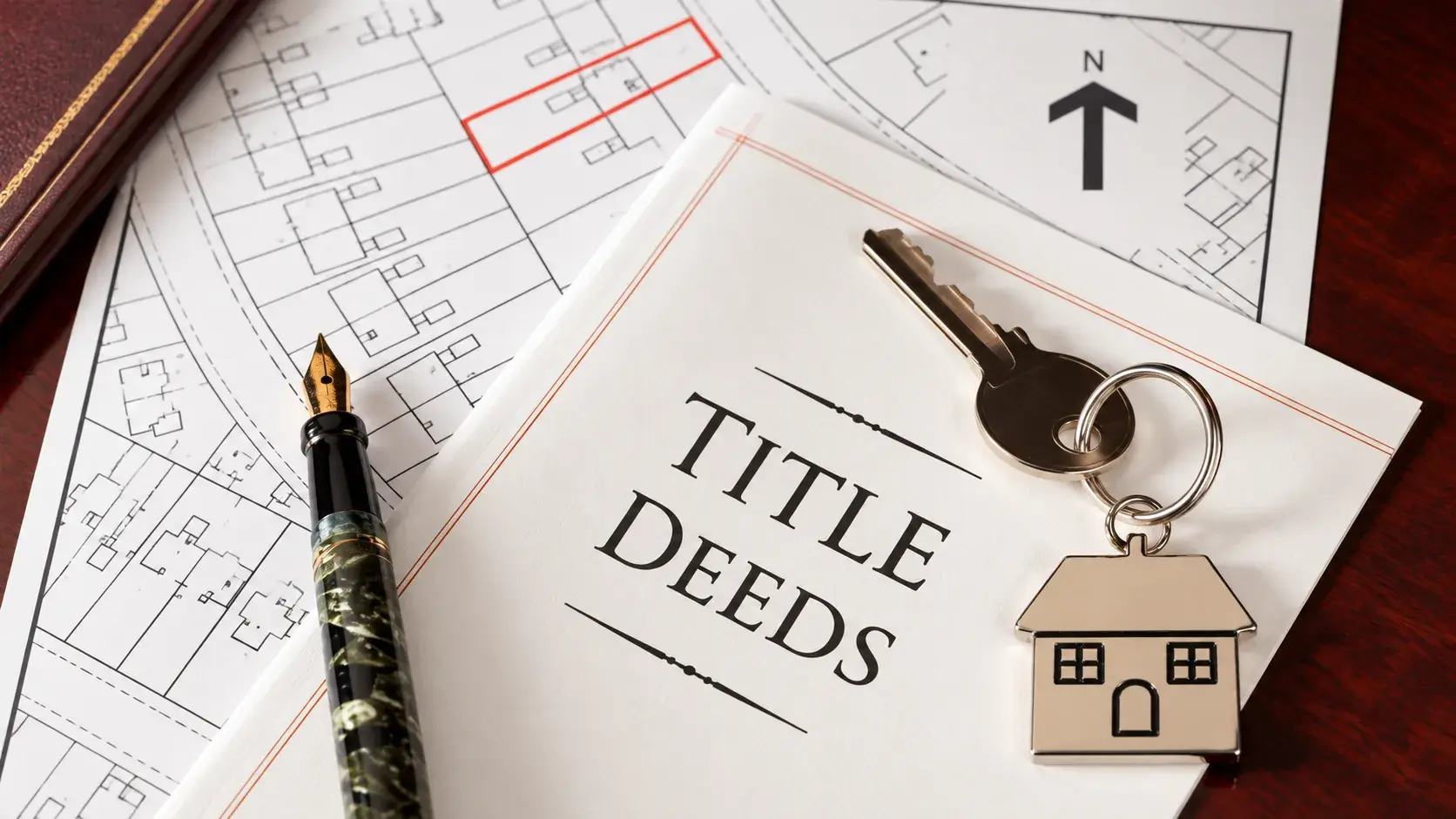
Buying Property in Panama With Crypto. Here's How It Works
Panama doesn't ban buying property with crypto, but most deals still pass through dollars. Where the conversion happens, the paperwork, and residency.

Reviewed by Gustavo Rodriguez — Legal & Contracts Specialist, Panama Property Guide. Last reviewed .

Yes, you can buy property in Panama with cryptocurrency: no law bans it and none regulates it, because the Supreme Court struck down the country's only crypto bill in 2023. Nearly every deal still passes through dollars, though, because escrow, banks and the investor visa run on them. Proving where your crypto came from is the real hurdle.
The costliest mistake is assuming the wallet-to-wallet route skips the paperwork. A buyer who paid a seller straight from a crypto wallet was refused residency twice by Panama's Servicio Nacional de Migración, for lack of proof the money came from abroad, before winning on appeal, according to Cruz, Jácome & Villarreal, the Panamanian law firm that handled the case.
The Corte Suprema de Justicia declared Bill 697 of 2021, which would have regulated crypto payments, unconstitutional in full in a ruling dated June 6, 2023, for breaching Article 170 of the Constitution. Four new crypto bills have been filed in the Asamblea Nacional since March 2025, and none had a first-debate date as of Oct. 25, 2026, Infobae reported.
The rules in this guide come from that ruling, Ley 23 of 2015 as compiled by the Superintendencia de Sujetos no Financieros, Decreto Ejecutivo No. 17 of 2026 and Towerbank's published account terms, read on Oct. 26, 2026. The buyer problems come from forum posts on Bitcointalk, expat.com, Hacker News and MoneySavingExpert, dated 2013 to 2026.
1. Pick how your crypto reaches the seller
There are four ways to turn a crypto balance into a Panamanian title. Only one keeps the money in crypto all the way to the seller, and it carries the fewest protections.
In that route the parties sign an exchange of assets rather than a sale. Lawyer Janice Becerra told CriptoNoticias in September 2021 that Panamanian crypto property deals were written as a contrato de permuta, with no dollars changing hands.
A wallet-to-wallet payment is recognized as long as the contract records it, says Gustavo Rodriguez, the legal and contracts specialist who reviewed this guide.
| Route | Who holds the money | Seller must take crypto | Main risk |
|---|---|---|---|
| Wallet to wallet (permuta) | Nobody; the transfer is final | Yes | No escrow, and the hardest source-of-funds file to build |
| Convert at a Panamanian bank | Towerbank, then your lawyer's escrow | No | A 2% to 5% conversion fee |
| Sell on an exchange abroad, wire dollars | Your exchange and home bank, then escrow | No | A home bank holding or rejecting the sale proceeds |
| Borrow dollars against bitcoin | Towerbank holds the bitcoin as collateral | No | The bank can sell your bitcoin if its price falls past the loan limit |
The dollar routes win for anyone buying toward residency. A pre-construction purchase used for the Qualified Investor visa must sit in a fideicomiso at a Panama-licensed bank or fiduciary, or be covered by a bank guarantee, under Article 7 of Decreto Ejecutivo No. 17 of 2026.
2. Build your source-of-funds file first
Panama makes the people selling you property part of its anti-money-laundering system. Article 23(3) of Ley 23 of April 27, 2015, as amended in 2017, lists developers, real estate agents and brokers as regulated non-financial entities whenever they handle a purchase or sale for a client.
Article 27(6) of the same law requires them to build a financial profile of each client, taking reasonable measures to support the origin of the funds. With crypto, that means showing how a balance on an exchange became the dollars you are paying with.
"Can you evidence both the purchase and the sale with a full audit trail?" a MoneySavingExpert user asked a buyer hoping to put crypto gains toward a deposit in April 2021.
| Document | What it proves | Who has asked for it |
|---|---|---|
| Passport | Your identity | Towerbank at account opening; every regulated party under Ley 23, Art. 27 |
| Work letter or other proof of income | That your wealth fits your profile | Towerbank at account opening |
| Screenshot of your exchange portfolio | That the crypto exists and where it sits | Towerbank at account opening |
| Exchange record of the sale into dollars | That the dollars are proceeds of that crypto | Towerbank, per La Prensa in June 2022 |
| Proof the funds came from abroad | Foreign origin of the money | Migración, under Art. 191 of Decreto Ejecutivo 320 of 2008 |
3. Convert to dollars at a Panamanian bank
Towerbank is the bank Panama City chose when its Concejo Municipal voted in April 2025 to accept bitcoin, ether, USDC and USDT for municipal taxes. Under the agreement signed April 23, 2025, Towerbank receives the crypto and converts it to dollars, and the city never holds crypto.
Its Ikigii account does the same for an individual buyer. Towerbank, licensed by the Superintendencia de Bancos de Panamá, says the account converts stablecoins, bitcoin and ether to dollars "in seconds" and can be opened online from anywhere "regardless of your nationality."
Opening one takes a passport, a work letter or other proof of income and, for anyone with an exchange account, a screenshot of the portfolio, according to the bank's product page. The app is offered in Panama, Mexico, Colombia, Argentina, Peru and five other Latin American countries.
The bank screens crypto transactions with Chainalysis software, La Prensa reported in June 2022, when Towerbank first declared itself crypto friendly.
Ikigii also lends dollars against bitcoin at up to 50% of the coins' value, at 10% interest over a one-year term that renews annually, and the bank may sell the bitcoin if the loan outgrows that limit, under the terms on its product page.
That loan is not a mortgage, and the product page does not mention property.
Decreto Ejecutivo No. 17 lets an investor-visa buyer finance anything above the minimum, as long as the financing is documented and traceable, under Article 5. A bitcoin-secured loan from a Panamanian bank is traceable financing for that purpose, Rodriguez says.
4. Put the dollars in escrow and close
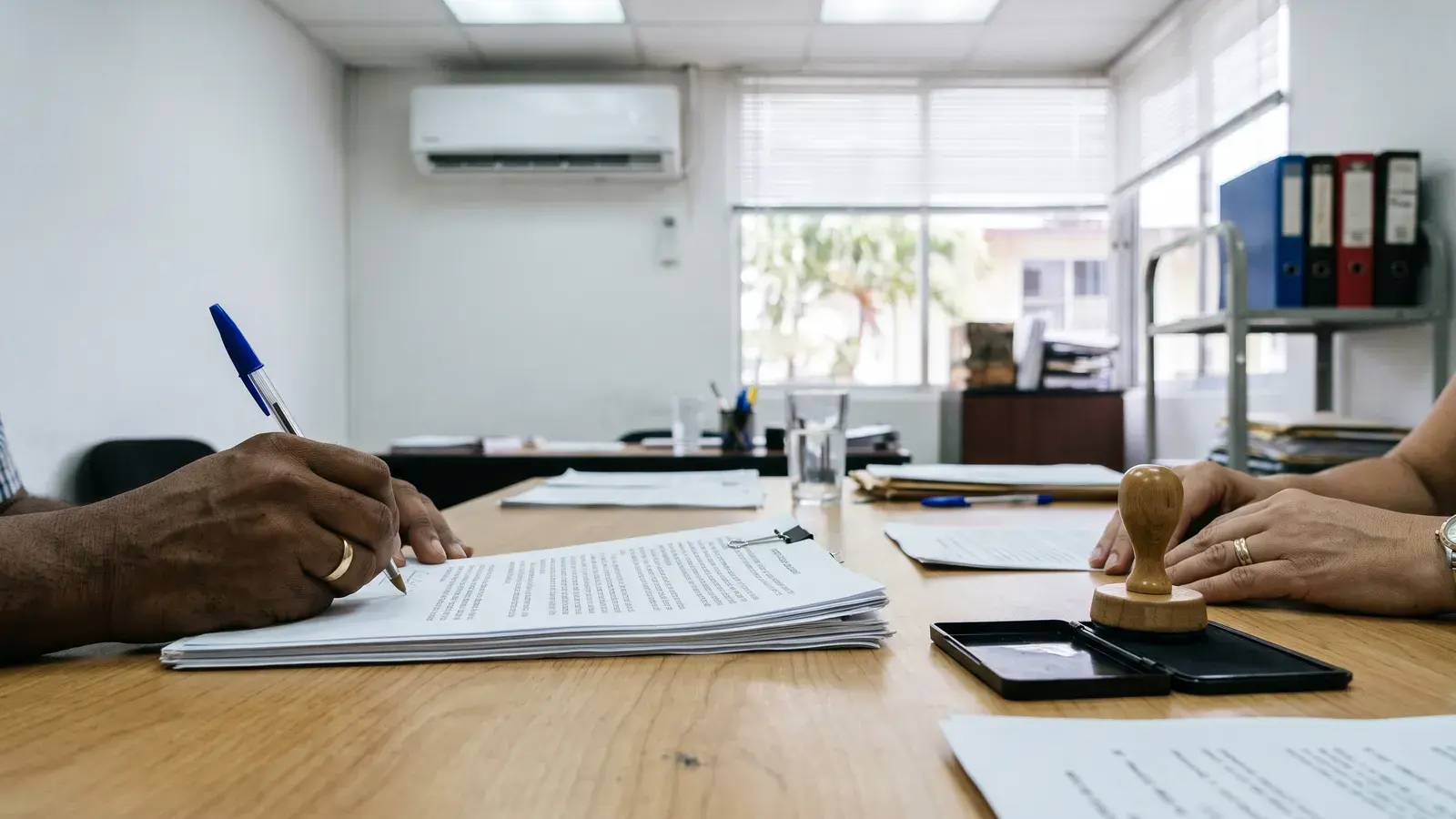
From here the purchase is an ordinary Panamanian one. You sign a promesa de compraventa, the money goes to escrow, a notary prepares the public deed and the sale is registered at the Registro Público, the sequence our step-by-step buying guide walks through.
Who holds that escrow matters more when the money cannot be clawed back. "It is important to have your own lawyer, do not use one the seller or the agent recommends," a buyer wrote on the expat.com Panama forum in 2026.
Pre-construction is where an irreversible payment hurts most. "Never buy pre-construction; many never get built and refunds are not provided," a longtime member of the same forum wrote about 13 years ago.
Decreto 17 now answers that for investor-visa buyers. The deposit must sit in a fideicomiso released only against the developer's contractual obligations, or the developer must post a standby letter of credit, bank aval or performance bond for the full amount, renewed every year until the unit is registered.
5. Crypto money and the investor visa
The Qualified Investor visa needs $300,000 in new-build property bought from the developer, or $500,000 in resale, under Decreto Ejecutivo No. 17, published in Gaceta Oficial Digital No. 30613 on Sept. 16, 2026. Our investor visa explainer covers the full rules.
Crypto has already been tested under an older residency category. In the Cruz, Jácome & Villarreal case, Migración denied the application because the buyer had no documents proving the money came from abroad, as Article 191 of Decreto Ejecutivo 320 of 2008 requires, and upheld the denial on reconsideration.
The appeal reversed it.
The firm argued the right rule was Article 193, the real estate investment category, which has no foreign-origin requirement, and the permit was granted after finding no sign the crypto was illicit, according to the firm's account. Panama Property Guide could not locate the resolution number.
The denials turned on a missing document, not on the crypto. The Article 193 category still exists after Decreto 17, Rodriguez says.
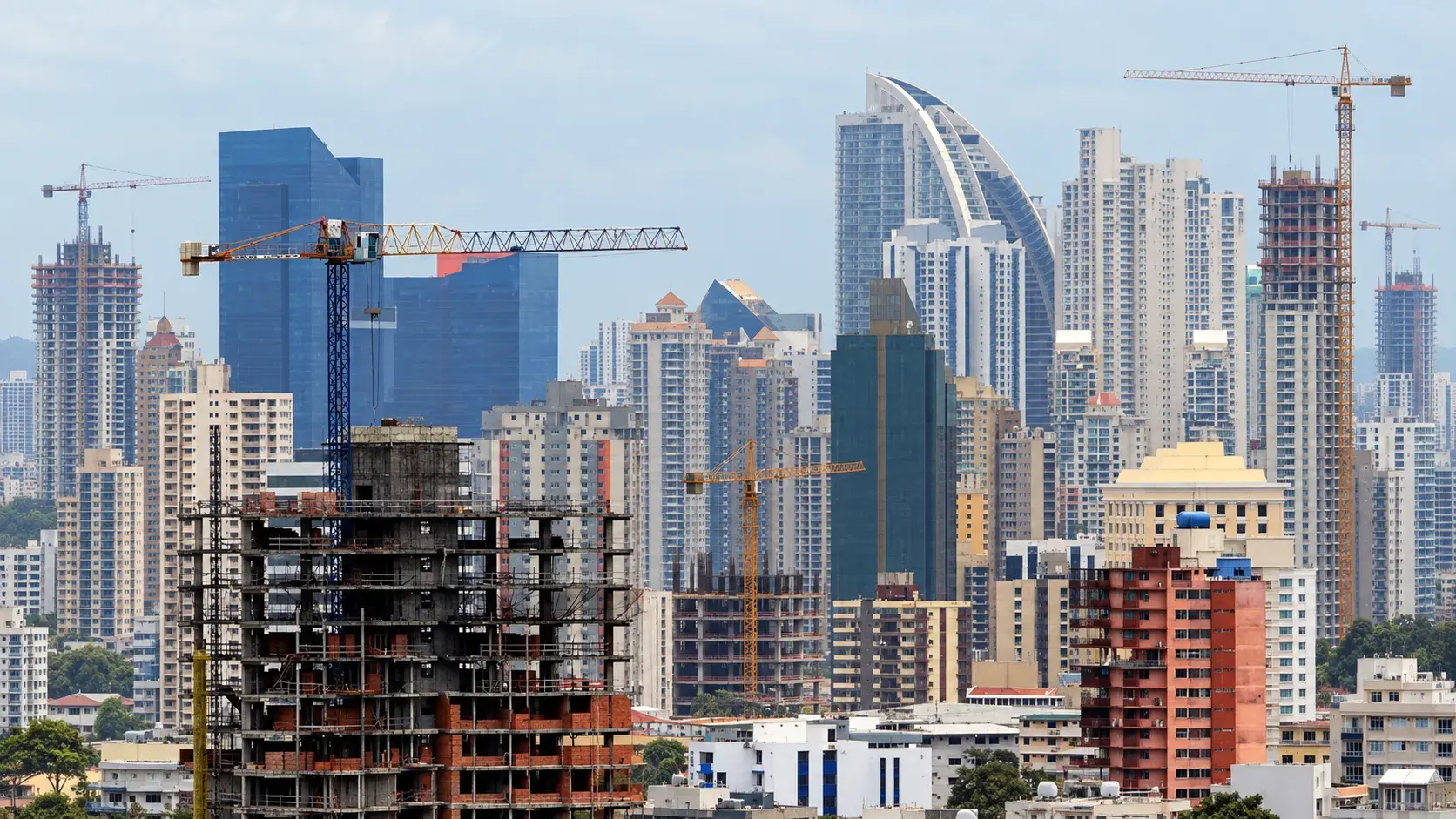
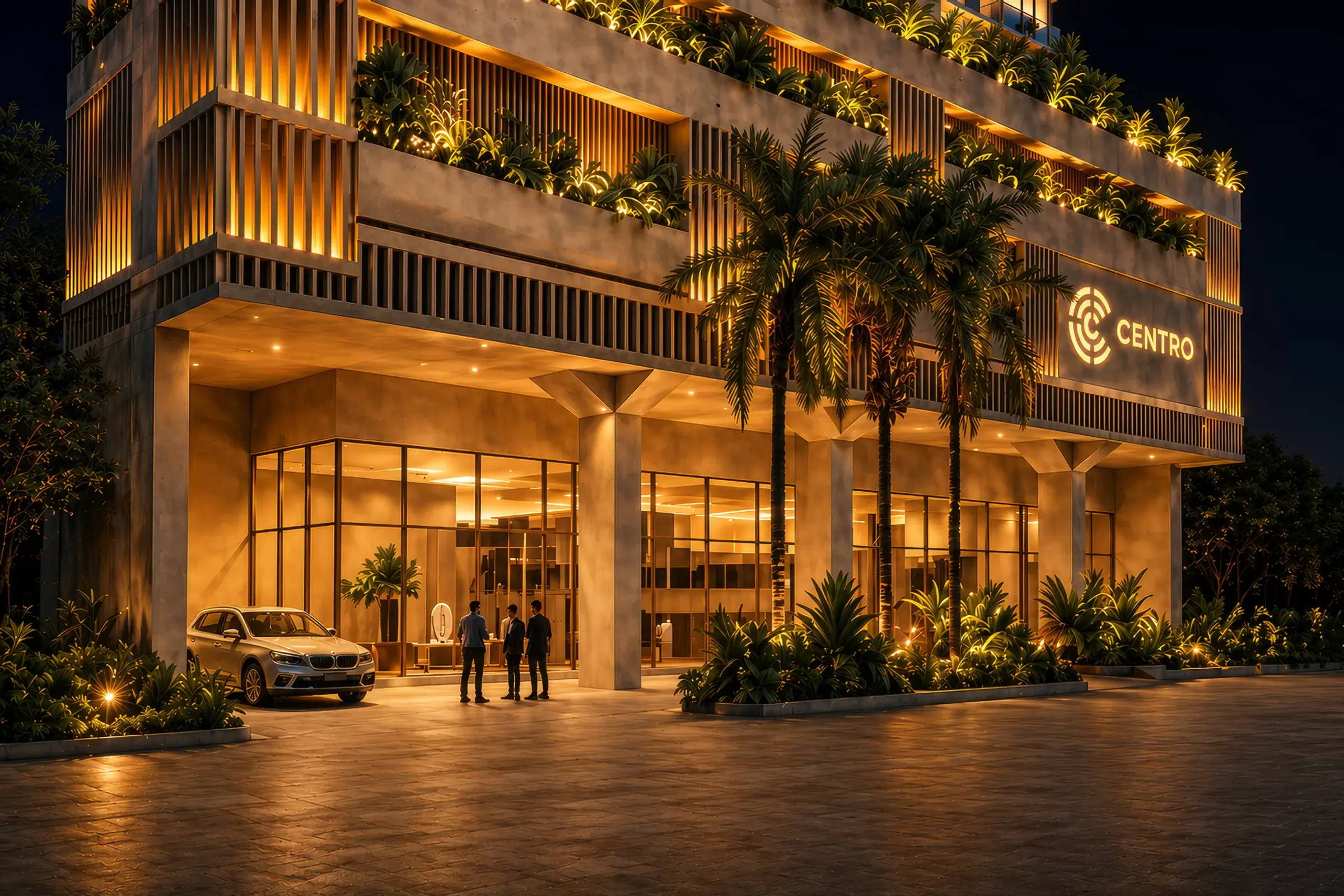
New-build projects in Panama City
New-build units bought from the developer qualify for the investor visa at $300,000 under Decreto 17.
 Pre-construction
 Pre-construction
The mistakes that cost money
- Believing bitcoin is legal tender in Panama. It is not, and the 2022 bill some forum users thought made it so never took effect, as one Bitcointalk user pointed out in April 2022.
- Sending a crypto deposit straight to a developer on a pre-sale. The transfer cannot be reversed, and Decreto 17 requires escrow or a bank guarantee for investor-visa pre-construction purchases.
- Paying wallet to wallet, then filing for residency with nothing showing the money came from abroad. That missing document is what Migración cited twice in the Cruz, Jácome & Villarreal case.
- Paying a "re-deposit" to unfreeze an exchange account. "A legitimate KYC, even at a SoW level, will not ask for a re-deposit," a Bitcointalk user warned in November 2023, in a thread about a frozen account holding about 74,000 USDT.
What tax authorities will see next
The tax bill that catches most buyers is the one at home. The US Internal Revenue Service treats virtual currency as property under Notice 2014-21, so selling bitcoin to fund a purchase, or swapping it directly for a condo, is a taxable disposal.
A Hacker News commenter wrote in May 2022 that after cashing out crypto for a 2020 home purchase, the lender refused the funds, "generating a ton of capital gains tax on money I couldn't even use."
Panama signed the OECD's Crypto-Asset Reporting Framework agreement on Dec. 2, 2025, committing its tax authority to exchange information on crypto-asset transactions with other countries every year, KPMG Panama reported. The firm noted that Panama had not yet put domestic rules in place to carry it out.
Frequently asked questions
Is bitcoin legal tender in Panama?
No. Panama uses the US dollar alongside the balboa, and the crypto bill the Asamblea Nacional passed in 2022 was declared unconstitutional by the Supreme Court in 2023. Crypto is not banned either: Panama City accepts bitcoin, ether, USDC and USDT for municipal taxes, converted to dollars by Towerbank.
Do I need a Panamanian bank account to convert crypto?
No. You can sell on an exchange abroad and wire dollars to your lawyer's escrow. A Panamanian account such as Towerbank's Ikigii converts bitcoin, ether and stablecoins to dollars inside Panama, and the bank says it can be opened online with a passport regardless of nationality.
Can I get a mortgage in Panama with crypto?
Not a crypto mortgage. Towerbank lends dollars against bitcoin at up to 50% of its value, 10% interest and a one-year renewable term, but its product page does not describe it as property lending. To size a conventional mortgage, compare starting rates from 15 Panama banks in our [mortgage calculator](/mortgage-calculator).
Does money from crypto qualify for Panama's investor visa?
It has. In a case handled by Cruz, Jácome & Villarreal, Migración twice refused a buyer who paid wallet to wallet, then granted residency on appeal under Article 193 of Decreto Ejecutivo 320 of 2008. The denials turned on missing proof that the funds came from abroad.
Can I pay a developer directly in USDT?
Only if the developer agrees, since no law makes a seller accept crypto. For investor-visa pre-construction purchases, Article 7 of Decreto Ejecutivo No. 17 of 2026 requires the money to sit in a bank fideicomiso or be backed by a bank guarantee.
Property for sale in Panama
Sources
- "La Corte Suprema rechaza el proyecto sobre criptoactivos; es inexequible" (Proyecto de Ley 697 de 2021) — La Prensa, October 26, 2026
- Supreme Court ruling of June 6, 2023 on Bill 697, published by edicto 835 on July 14, 2023 — La Estrella de Panamá, October 26, 2026
- "La Superintendencia del Mercado de Valores de Panamá excluye a las criptomonedas de su supervisión", Oct. 25, 2026 — Infobae, October 26, 2026
- Panama City council agreement on paying municipal taxes in crypto, with Towerbank as converter — La Estrella de Panamá; Gaceta Oficial No. 30302, October 26, 2026
- Ley 23 de 27 de abril de 2015, Articles 23 (as amended by Ley 21 de 2017, Art. 124) and 27; Ley 124 de 2020, Art. 40, in the regulator's official compilation — Superintendencia de Sujetos no Financieros, October 26, 2026
- Decreto Ejecutivo No. 17 de 8 de septiembre de 2026, Articles 5 and 7, read in full — Gaceta Oficial Digital No. 30613, Gaceta Oficial de Panamá, September 17, 2026
- Ikigii account and bitcoin-backed loan terms — Towerbank International Inc., October 26, 2026
- Conversion fee, timing and non-resident eligibility, provided to Panama Property Guide — Towerbank International Inc., October 26, 2026
- "El ABC para entender el rumbo 'cripto' de Towerbank", June 14, 2022 — La Prensa, October 26, 2026
- Residency granted on appeal for a property bought with cryptocurrency (case of Cruz, Jácome & Villarreal) — Diaz Reus, October 26, 2026
- "Comprar o vender casas con bitcoin se pone de moda en Panamá", Sept. 12, 2021 — CriptoNoticias, October 26, 2026
- Panama signs the CARF Multilateral Competent Authority Agreement, Dec. 2, 2025 — KPMG Panamá, October 26, 2026
- Notice 2014-21 and frequently asked questions on virtual currency transactions — Internal Revenue Service, October 26, 2026
- Forum threads on crypto-funded purchases and Panama property: Bitcointalk (2022, 2023), expat.com Panama forum (c. 2013, 2026), Hacker News (May 1, 2022), MoneySavingExpert (Apr. 9, 2021) — Bitcointalk, expat.com, Hacker News, MoneySavingExpert, October 26, 2026
- Buying with Crypto
- Foreign Buyers
- Qualified Investor Visa
About the author

Esia Thompson
Staff Writer, Markets & Trends
Esia Thompson is a real estate writer with five years of experience covering Panama's property market, economic developments, and emerging lifestyle trends. She translates market research and industry insights into accessible content that helps readers make informed decisions about living, buying, and investing in Panama. She works from primary documents, naming the source and the date on every figure she publishes.
About the reviewer

Gustavo Rodriguez
Legal & Contracts Specialist · Panama Property Guide
Gustavo Rodriguez has six years of experience working with the legal and contractual aspects of Panama real estate. His areas of focus include property transactions, contracts, due diligence, ownership structures, and regulatory requirements. He helps readers better understand the legal considerations involved in buying and investing in Panama.
Panama property, once a week
New listings worth a look, what moved in the market, and the guides we published. No sales pitch.