
Buying Property in Panama: Steps, Costs and Legal Risks
Foreigners buy on the same legal terms as Panamanians, outside 10 km of a border. The steps, the 2026 costs and the three problems buyers report most.

Reviewed by Gustavo Rodriguez — Legal & Contracts Specialist, Panama Property Guide. Last reviewed .

Yes. Foreigners can buy property in Panama in their own name on the same terms as Panamanians, except within 10 kilometers of a national border, under Articles 20 and 291 of the Constitution. The purchase runs through a promesa de compraventa, a public deed signed before a notary and registration at the Registro Público.
The problem buyers raise most often on forums is land that turns out not to be titled. Rights of possession let someone occupy land the State has not titled, and the Autoridad Nacional de Administración de Tierras (ANATI) recognizes a claim only after more than five years of possession, under Ley 80 of 2009 as amended in 2010.
Titled or not, every sale meets the same gate at the end. The Registro Público will not register a transfer until the property is clear of property tax and, where the national water utility IDAAN supplies service, of its water bill.
The rules in this guide come from the Constitution, the Código Civil, the Código Fiscal, Ley 284 of 2022 on condominiums and Ley 546 of 2026 on the transfer tax, read in official copies on September 14, 2026. The buyer problems come from 37 posts on expat.com, BiggerPockets and three other sites, dated 2013 to 2026.
1. Check that the land is titled
Titled property is a finca inscribed at the Registro Público, with a registered owner you can look up. Rights of possession are a separate registry category, and the holder still has to go through ANATI to turn them into title.
Some land can never be titled. Ley 80 excludes the first 22 meters inland from the high-tide line on the Pacific and 10 meters on the Atlantic, along with mangroves and protected areas, under Articles 2 and 10.
An investor put it bluntly on the BiggerPockets forum in January 2021: "Never buy a Right of Possession, just never do that."
Two limits apply only to foreigners. Article 291 of the Constitution bars them from acquiring land less than 10 kilometers from a border and allows islands to be sold only for specific development purposes, while Article 258 keeps beaches in the hands of the State.
2. Hire a lawyer who works for you
Anyone who habitually brokers property sales in Panama needs a license from the Junta Técnica de Bienes Raíces and a $10,000 bond renewed each year, under Decreto Ley 6 of 1999. A foreign broker needs five years of residence to qualify.
Brokers, developers and lawyers who take part in a sale are also bound by Ley 23 of 2015 on money laundering and must identify and verify their clients. Expect to show a passport and answer questions before closing.
Buyers on expat.com keep returning to one question, whose side the lawyer is on. "It is important to have your own lawyer, do not use one the seller or the agent recommends," one member wrote in June 2026, and another warned in the same thread that lawyer recommendations on social media sometimes come from the lawyer's own relatives.
Put the question in writing before you sign an engagement letter: has this lawyer or firm acted for the seller or the developer on this property.
3. Search the registry before paying
One scam described on expat.com in June 2026 needs nothing more than a listing: "faking to be the owner of property that is for rent or sale, charging clients for 'fees' or 'rent' and then disappearing with the money."
The registry is the check that defeats it. When an owner goes to court to remove an intruder, the Código Procesal Civil asks for a Registro Público ownership certificate issued within the previous six months (Ley 402 of 2023, Article 659).
Ask the seller for a certificate just as recent, and match the owner's name to the passport or cédula of the person you are paying.
4. Sign and register the promesa
A promise to buy or sell real property must be in writing and cannot run longer than four years, under Article 1221 of the Código Civil. Made as a public deed and registered, it stops the seller from selling or mortgaging the property without your consent.
No Panamanian law read for this guide requires a developer to hold a buyer's deposit in escrow. The one escrow rule found applies to foreigners using an off-plan purchase for the Qualified Investor visa, who must pay through a bank trust or be covered by a bank performance guarantee (Decreto Ejecutivo 193 of 2024).
Without that protection, the payment schedule is the safeguard, and it fails in a familiar way. Describing two builds in June 2026, an expat.com member said the contractors "had consumed the money without reaching the milestones."
5. The deed and registration
The sale itself is signed before a notary as an escritura pública. For a condo, the notary must demand the building's paz y salvo certificate before recording it, under Article 114 of Ley 284 of 2022, and the administration must issue that certificate within three calendar days of a request.
The Registro Público then refuses to inscribe the transfer until the property is clear of property tax, citing Article 792 of the Código Fiscal, and clear with IDAAN where IDAAN supplies water, under Article 49 of Ley 77 of 2001.
The deed must also record the receipts for the seller's 2% transfer tax and 3% income tax advance, under Article 701 of the Código Fiscal. Registration costs $10 per property plus $3 for each $1,000 on the Registro Público's published 2013 schedule, or $910 on a $300,000 apartment.
6. Financing as a foreigner

Panama adds a 1% annual surcharge, the Fondo Especial de Compensación de Intereses (FECI), to personal and commercial loans above $5,000 (Ley 4 of 1994, Article 3). A mortgage on your primary residence falls outside it, but a foreign owner qualifies for that exemption only as a permanent resident (Article 13).
Our mortgage calculator runs a payment against the published starting rates of 15 banks, copied by hand from each bank's tariff on September 13, 2026.
The costs, from closing to resale
The two largest taxes in a sale fall on the seller, and Ley 546 of 2026 voids any clause that shifts the transfer tax onto the buyer in the first sale of a new home. Panama's laws state amounts in balboas, which trade at par with the US dollar.
| Stage | Cost | Amount | Source |
|---|---|---|---|
| Buying | Registry inscription | $10 per property plus $3 per $1,000 | Registro Público schedule, 2013 |
| First sale of a new home | Transfer tax, paid by the seller | First $120,000 exempt; 0.5% to 1.8% on the excess up to $200,000; above that, 2% on the excess over $120,000 | Ley 546 of 2026, Article 1 |
| Owning your primary residence | Property tax | 0% to $120,000; 0.5% on the excess to $700,000; 0.7% above | Código Fiscal, Article 766 |
| Owning other property | Property tax | 0% to $30,000; 0.6% to $250,000; 0.8% to $500,000; 1% above | Código Fiscal, Article 766-A |
| Owning a condo | Contingency reserve | At least 1% of the building's annual fee income | Ley 284 of 2022, Articles 46 and 47 |
| Borrowing without permanent residence | FECI surcharge | 1% a year | Ley 4 of 1994, Articles 3 and 13 |
| Selling | Transfer tax | 2% of the price or of the cadastral value plus 5% per full year owned, whichever is higher | Ley 106 of 1974, DGI Form 106 |
| Selling | Income tax on the gain | 10% of the gain, with 3% of the price or cadastral value, whichever is higher, paid in advance | Código Fiscal, Article 701(a) |
A first home registered as your primary residence with a cadastral value between $120,000 and $300,000 pays no property tax for three years (Código Fiscal, Article 766). The saving depends on that registration being made.
- $120,000 cadastral value$0
- $200,000 cadastral value$400
A first home registered as primary residence pays nothing for three years
- $300,000 cadastral value$900
A first home registered as primary residence pays nothing for three years
- $500,000 cadastral value$1,900
- $800,000 cadastral value$3,600
Código Fiscal, Article 766, as amended by Ley 66 of 2017. Calculation by Panama Property Guide, September 2026.
- $120,000 cadastral value$540
- $200,000 cadastral value$1,020
- $300,000 cadastral value$1,720
- $500,000 cadastral value$3,320
- $800,000 cadastral value$6,320
Código Fiscal, Article 766-A, as amended by Ley 66 of 2017. Calculation by Panama Property Guide, September 2026.
New projects in Panama City
Each card shows the project's delivery date and starting price.
 Pre-construction
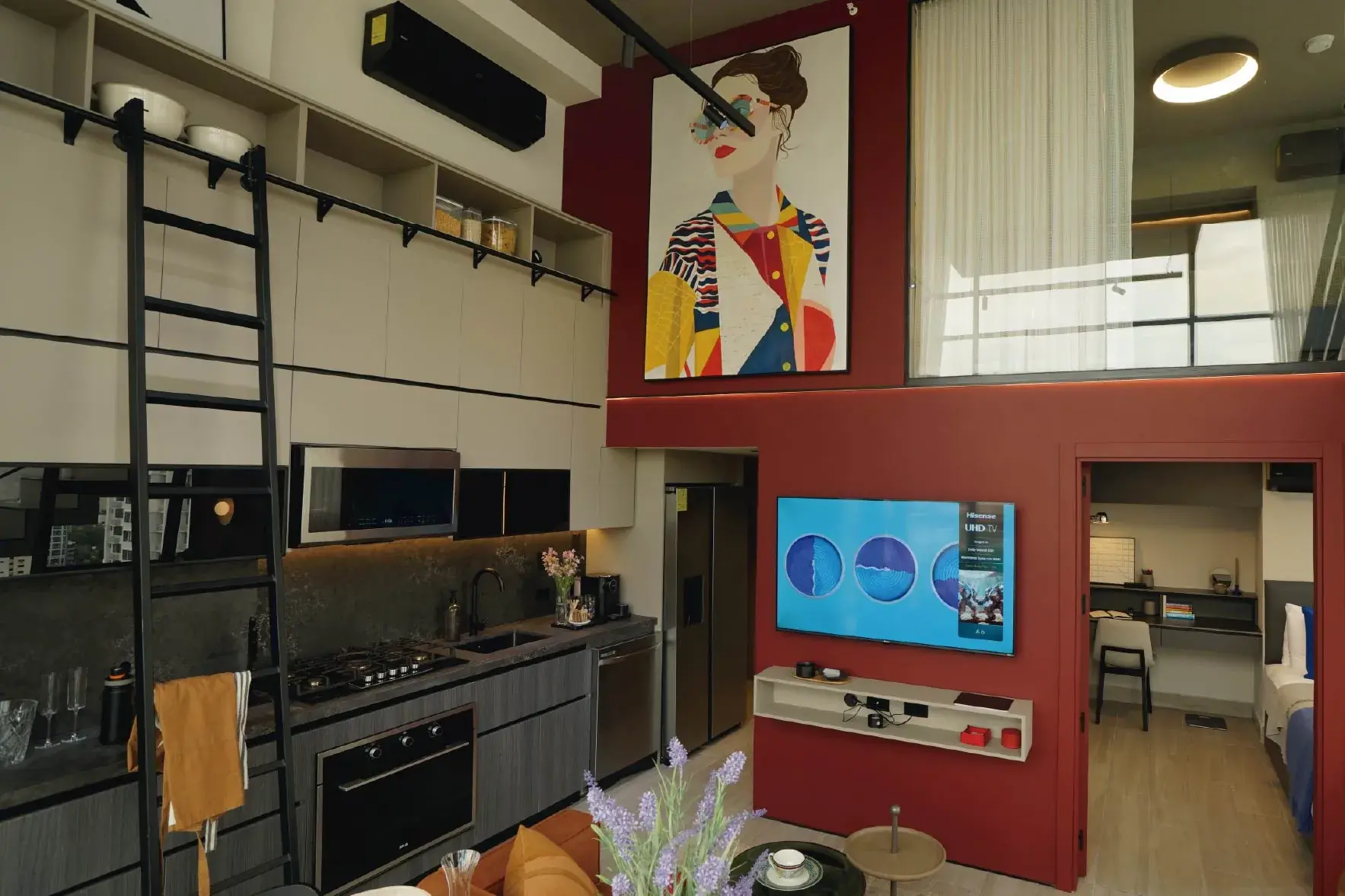 Ready for occupancy
The mistakes that cost money
- Paying a builder ahead of the work, the pattern behind the two stalled builds described on expat.com in June 2026.
- Buying cheap land without checking utilities. "There was no water or electricity," an expat.com member wrote of a lot in March 2024.
- Assuming the lawyer filed the tax exemption. A member blamed a lawyer on expat.com in 2015 who "never filed the forms for my exemptions."
- Leaving a property empty with no one checking. An owner wrote on expat.com in November 2025 of occupants in a house in Volcán, Chiriquí: "I did not rent or sell my property to them."
If someone moves onto your property
Panama's Código Civil lets a possessor acquire land by prescription. With good faith and just title, it takes 10 years of public, peaceful and uninterrupted possession, or 20 when the owner lives abroad; without either, it takes 15 years, under Articles 1694 to 1696.
Two rules work in the owner's favor. The shorter route cannot run against a title inscribed at the Registro Público except under another registered title (Article 1686), and occupation with the owner's permission or tolerance does not count at all (Article 1680).
Filing a lawsuit interrupts the clock (Article 1683). To remove occupants, the owner or someone acting for them can apply to the municipal judge or a juez de paz for a lanzamiento por intruso under Article 659 of the Código Procesal Civil, and an occupant who cannot show a valid title gets 15 days to leave.
That article accepts an administrator as the applicant, which matters for owners abroad. The same forum shows the risk of choosing badly: a member wrote in November 2025 that caretakers can "rent it out and pocket the money."
When the developer never transfers the title
On Isla Naos, at the entrance to the Panama Canal, buyers of the Naos Harbour Island apartments are still waiting. La Prensa's investigative unit reported on August 17, 2026 that the State rescinded the project's land concession in March 2026 and ordered the attachment of 79 of its 136 units, including apartments sold years earlier whose titles remain in the developer's name.
The project sat on state land held under concession, and land belonging to the Nation can never be acquired by prescription (Código Civil, Article 1670). Ley 284 of 2022 requires a new-home promesa to describe the land and who owns it (Article 120), which is the line to check first.
The same law makes the developer deliver within the contract's dates and keep its company in existence until the 10-year construction warranty in Article 1343 of the Código Civil expires (Article 52). Any charge between delivery and title is capped at 1% of the unpaid balance for three months, and the consumer protection authority, ACODECO, enforces it (Article 120).
Who really owns your company
Buying through a Panamanian corporation is legal, and it carries a trap an expat.com member described in June 2026: the lawyers who formed the company "together owned 70% and I owned 30%."
The Registro Público shows who founded a corporation and its directors, at least three of them (Ley 32 of 1927, Article 2). Who owns the shares today appears only in the share register the company keeps itself (Article 36).
There is no public shortcut. The beneficial ownership register created by Ley 129 of 2020 is private, open only to the resident agent and two officials of the supervising agency (Article 14), and since December 31, 2015 bearer shares have been treated as prohibited unless the company opted into custody (Ley 18 of 2015).
The proof that you own the company is its share register entry and the certificates in your name. A private interest foundation's registered charter names its council but states only how beneficiaries are chosen, not who they are (Ley 25 of 1995, Article 5).
Residency through a purchase
A foreigner who invests at least $300,000 from abroad in property free of liens can apply for Qualified Investor residence under Decreto Ejecutivo 722 of 2020, as amended by Decreto Ejecutivo 193 of 2024. The investment must be held for at least five years.
Several websites say that minimum rises to $500,000 on October 15, 2026. That date does not appear in Decreto 722, in Decreto 109 of 2022 or in Decreto 193; the $300,000 figure was a temporary rule that ran to October 2024, and Decreto 193 made it permanent.
Citizens of the countries on the Friendly Nations list, including the United States and Canada, can instead show a Registro Público certificate for property worth at least $200,000, which a local bank may finance (Decreto Ejecutivo 416 of 2012, as amended by Decreto Ejecutivo 226 of 2021).
Frequently asked questions
Can an American citizen buy a house in Panama?
Yes. Article 20 of Panama's Constitution makes foreigners and Panamanians equal before the law, and no rule bars an American from owning a titled home. The exceptions are land within 10 kilometers of a national border (Article 291) and beaches, which belong to the State (Article 258).
Is it safe to buy property in Panama?
Panama's protection for buyers sits in the Registro Público: a registered title, and a promesa registered under Article 1221 of the Código Civil, bind against third parties. The problems buyers report on forums involve property outside that system, such as untitled rights of possession or apartments whose developer never transferred title.
Can foreigners buy near the border or on islands?
Not within 10 kilometers of a national border: Article 291 of the Constitution bars foreign individuals, and companies with foreign capital, from acquiring land there. The same article allows island territory to be sold only for specific development purposes, and the beach strip cannot be titled at all under Ley 80 of 2009.
What do I pay every year after I buy?
Property tax, plus condo fees in a building. A primary residence pays nothing on the first $120,000 of cadastral value, 0.5% on the excess to $700,000 and 0.7% above; other property pays 0.6% to 1% above $30,000 (Código Fiscal, Articles 766 and 766-A). A condo must also fund a reserve of at least 1% of its annual fee income (Ley 284 of 2022).
Property for sale in Panama City
Sources
- Constitution of the Republic of Panama, Articles 20, 258 and 291 — Ministerio Público de Panamá (official edition), September 14, 2026
- Ley 80 of 31 December 2009 on possession rights and titling, as amended by Ley 59 of 2010 — Asamblea Nacional (Legispan), September 14, 2026
- Código Civil, Articles 1221, 1343, 1670, 1680, 1683, 1686 and 1694 to 1696 — Órgano Judicial de Panamá (CENDOJ), September 14, 2026
- Ley 402 of 2023 adopting the Código Procesal Civil, Article 659 (lanzamiento por intruso) — Órgano Judicial de Panamá, September 14, 2026
- Ley 546 of 31 August 2026 amending Article 4 of Ley 106 of 1974 (transfer tax on new homes) — Gaceta Oficial No. 30601-B (Procuraduría de la Administración copy), September 14, 2026
- Real estate transfer tax (ITBI), Form 106: rate and taxable base — Dirección General de Ingresos (DGI), MEF, September 14, 2026
- Código Fiscal, Article 701(a), as worded by Ley 49 of 2009 (capital gains and 3% advance) — Ministerio de Economía y Finanzas, September 14, 2026
- Ley 66 of 17 October 2017 on property tax (Código Fiscal Articles 764-A, 766 and 766-A) — Asamblea Nacional (Legispan), September 14, 2026
- Ley 284 of 14 February 2022 on horizontal property, Articles 46, 47, 52, 114 and 120 — Asamblea Nacional (Legispan), September 14, 2026
- Ley 77 of 28 December 2001, Article 49 (IDAAN clearance before registration) — Autoridad Nacional de los Servicios Públicos (ASEP), September 14, 2026
- Registro Público fee schedule (Tarifas, 2013) and Manual de Calificación (2014) — Registro Público de Panamá, September 14, 2026
- Decreto Ley 6 of 8 July 1999 regulating real estate brokers — Ministerio de Comercio e Industrias, September 14, 2026
- Ley 23 of 27 April 2015 on money laundering prevention (consolidated text) — Comisión Nacional contra el Blanqueo de Capitales, MEF, September 14, 2026
- Ley 4 of 1994 on the FECI surcharge, consolidated text, Articles 3 and 13 — Superintendencia de Bancos de Panamá, September 14, 2026
- Criterios de Interpretación del FECI, criteria 18, 19 and 27 — Superintendencia de Bancos de Panamá, September 14, 2026
- Ley 32 of 1927 on corporations, Ley 47 of 2013 and Ley 18 of 2015 on bearer shares, Ley 129 of 2020 on beneficial owners, Ley 25 of 1995 on private interest foundations — Órgano Judicial de Panamá and Asamblea Nacional (Legispan), September 14, 2026
- Decretos Ejecutivos 722 of 2020, 109 of 2022 and 193 of 2024 (Qualified Investor residence) — Servicio Nacional de Migración, September 14, 2026
- Decreto Ejecutivo 226 of 20 July 2021 amending Decreto Ejecutivo 416 of 2012 (Friendly Nations) — Servicio Nacional de Migración, September 14, 2026
- "Compraron apartamentos frente al Canal; ahora viven atrapados en el conflicto de Naos", 17 August 2026 — La Prensa (Panamá), Unidad Investigativa, September 14, 2026
- Buyer posts on the expat.com Panama forum (threads dated 2015 to 2026) — expat.com, September 14, 2026
- "Anyone investing in Panama?" thread (2017 to 2024) — BiggerPockets, September 14, 2026
- Buying
- Due diligence
- Taxes and costs
About the author

Esia Thompson
Staff Writer, Markets & Trends
Esia Thompson is a real estate writer with five years of experience covering Panama's property market, economic developments, and emerging lifestyle trends. She translates market research and industry insights into accessible content that helps readers make informed decisions about living, buying, and investing in Panama. She works from primary documents, naming the source and the date on every figure she publishes.
About the reviewer

Gustavo Rodriguez
Legal & Contracts Specialist · Panama Property Guide
Gustavo Rodriguez has six years of experience working with the legal and contractual aspects of Panama real estate. His areas of focus include property transactions, contracts, due diligence, ownership structures, and regulatory requirements. He helps readers better understand the legal considerations involved in buying and investing in Panama.
Panama property, once a week
New listings worth a look, what moved in the market, and the guides we published. No sales pitch.